Review: Peter Thabit Jones ‘The Boy Who Drew John Lennon’
There is something forbidding, about writing a review of a poet like Peter Thabit Jones; the fear that you will not do justice to poetry so moving and expressive. Peter is one of Wales’s foremost living poets and a writer of considerable talent. He has authored numerous collections and collaborations in both English and Romanian, opera libretto’s, three verse dramas and two plays about Dylan Thomas. At the centenary of Thomas’s birth, he produced a ‘walking tour’ guide to Greenwich Village with the late Aeronwy Thomas, Dylan’s daughter. Since 2010 he has been writer in residence annually in Big Sur California, has received several awards for poetry, and had a poem feature in an award-winning film. ‘The Boy Who Drew John Lennon’ (2026) is his latest and possibly one of his best collections, a poet at the apex of his talent. A writer of deceptive skill producing work of apparent simplicity masking the craftmanship that produced it, a sign of a poet of significance. The opening poems, recollections of childhood, observe life through the naivety of a child a rare quality few adult writers can achieve, Harper Lee and Aeronwy’s account of her childhood in Wales among the few. The result are poems of touching insight and emotion. Recollections of Wales and a Welsh childhood go far beyond mere nostalgia and geography to human truths we can all understand. Poems about his child who died in infancy are so raw I am reluctant to write of them as if intruding on a grief unrelented over the years. “To story my loss of you. / The words we never said, / The hugs we never gave, / Are the flowers of prayers laid / On the grave’s cold stillness.” Poems about America enable us to know both its beauty and squalor and the “engines of its internal magic”. The opening lines of ‘Old Artist’ demonstrate the extent of Peter’s poetic command, “You call us to your cenotaphs of pain / The charcoaled streets of human misery.” There are tributes Billie Holiday, several to Bob Dylan and poets Peter obviously loves. Finally there is the social commentary – homelessness, victims of war and bigotry and a poem which perfectly outlines the fatuous danger of social media as it re-programmes what it is to be human. The breath-taking (I do not use the word lightly) strength of Peter’s work is built on consummate skill in the craft of poetry and a depth of humanity that underlies everything he writes about from the rugged beauty of Big Sur, the victims of intolerance and violence, to a dead bird at the roadside. ‘The Boy Who Drew John Lennon is magnificent.

For many people, their first encounter with poetry happened in a classroom, reading printed lines from a page and trying to decipher the meaning hidden within them.
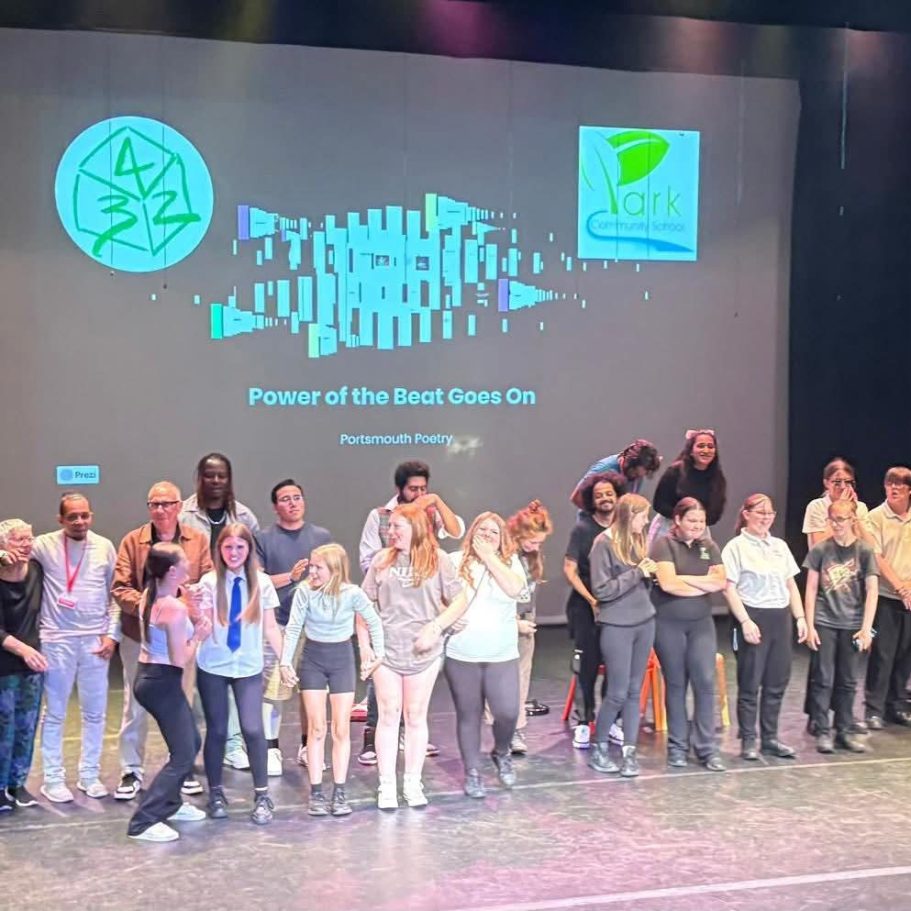
Poetry has a curious way of appearing when we least expect it. It slips into our lives through a line in a song, a phrase scribbled in a notebook, a performance that stays with us long after the room has emptied.
Poetry has always been one of humanity’s oldest and most enduring art forms. Long before the printing press or digital media, people gathered around fires, in marketplaces, and in halls to hear stories told in rhythm and rhyme.